
If you want to win at SEO today, speed wins. Specifically, content velocity. It isn’t just a nice bonus anymore; it is the baseline. Brands that push out great content consistently are the ones grabbing the top SERP spots and turning searchers into buyers. But let’s be real: trying to run a relentless editorial calendar entirely by hand is exhausting, incredibly expensive, and almost always ends in missed deadlines.
That is where an automated blog publishing tool changes the game. By stripping away the manual drag of drafting, formatting, and uploading, companies can scale up their output without losing their minds. In this guide, we look at how these automation setups rewrite the old marketing playbook and how Nunxia helps you expand your search footprint without the headache.
The Bottleneck in Traditional Content Production
The old way of making content is painfully slow. It is a long, tedious chain: find keywords, write a brief, draft, edit, format, find images, optimize headers, copy-paste into your CMS, and finally hit publish. For most marketing teams, that whole cycle eats up 5 to 15 hours of manual work for just one post.
Now, try doing that 50 or 100 times a month. The wheels fall off instantly. Freelance budgets balloon, quality drops, and deadlines fly out the window. An automated blog publishing tool takes care of the repetitive, mechanical parts of this workflow so your team does not have to.
If you want to automate the actual writing too, setting up an AI blog writing autopilot lets you churn out optimized drafts that need only a quick human glance before going live. It is the easiest way to bridge the gap between scale and quality.
How an Automated Blog Publishing Tool Works
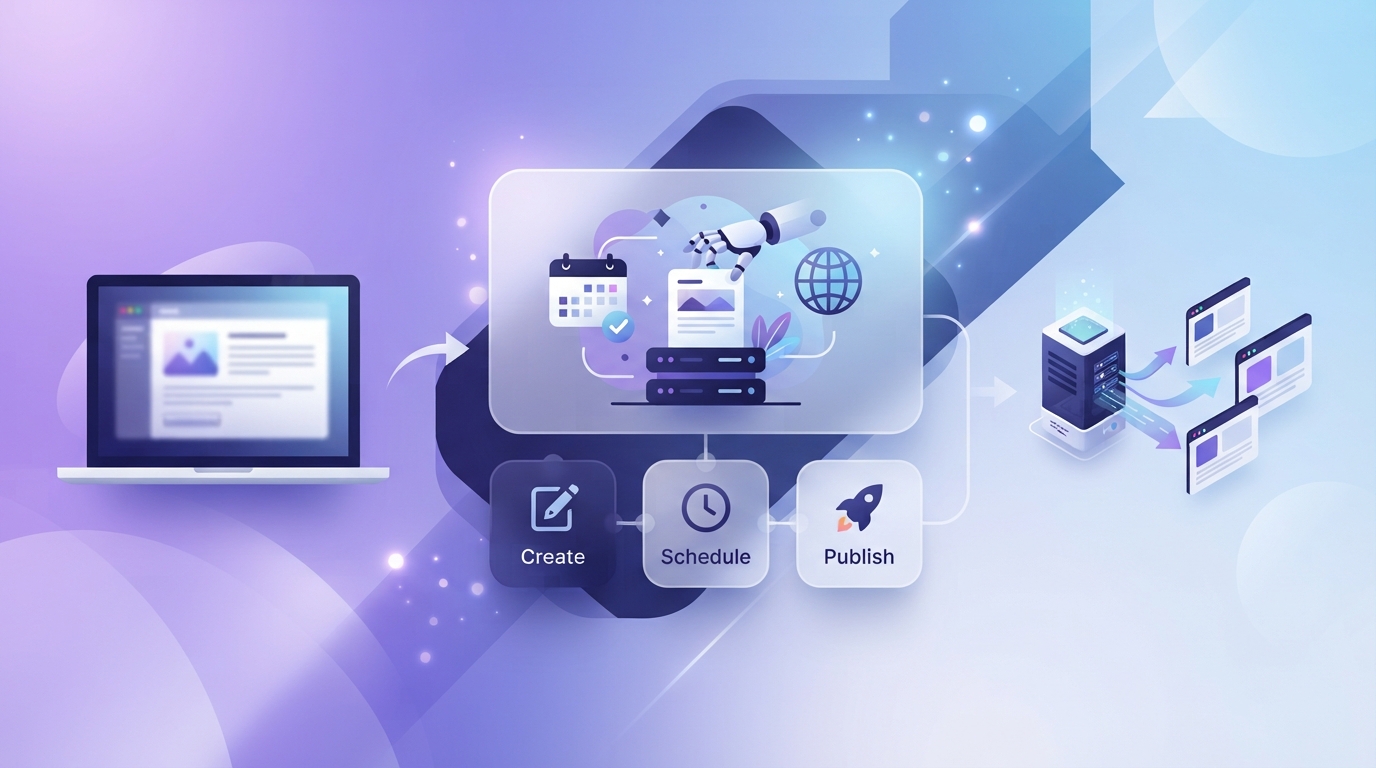
Strip away the jargon, and a publishing automation tool is simply the link between your strategy and your CMS, like WordPress. It handles the heavy lifting across several key steps:
- Keyword & Topic Integration: It imports your target terms directly from spreadsheets or SEO tools.
- Content Generation & Structuring: It writes SEO-friendly copy complete with proper H2/H3 tags, bulleted lists, and clean HTML.
- On-Page Optimization: It automatically generates meta tags and maps out smart internal linking.
- Scheduling & Direct Publishing: It drops the finished post straight into your CMS queue to go live on a set schedule.

Maximizing Search Visibility with Consistent Scheduling
Search engines love sites that prove they know their stuff by publishing fresh content regularly. When Google’s crawl bots visit your site and always find new, helpful pages, they index your content faster and trust your domain more.
But dumping 30 articles on a random Tuesday and then going radio silent for two months does not work. Search engines want a predictable, steady drip. Using an automated SEO content scheduler keeps your queue active on auto-pilot, feeding the search bots fresh pages while you focus on other work.
“Consistency is the lifeblood of SEO. Search engines reward sites that steadily publish clear, structured content that gives searchers exactly what they want.”
Why Agencies and Enterprises Need Automation
If you run an agency with dozens of clients, doing all this manually is a massive margin killer. Juggling freelance writers, chasing down edits, and hand-uploading draft after draft into various CMS dashboards eats up precious hours.
By adopting an AI marketing automation tool for agencies, your team can handle multiple client sites from one central hub. It makes your operations incredibly lean, letting you offer high-volume content packages that old-school agencies can’t compete with.

Expanding Globally with Multi-Language Automation
If you are eyeing global markets, translating your content is a massive shortcut to growth. But doing this manually is a nightmare. You have to hire native writers and local SEO pros for every single country.
Modern tools completely bypass that headache. With smart multi-language SEO automation, your publishing tool can translate, adapt, and post content tailored to local search behavior in dozens of languages at once. You get access to low-competition international search traffic with almost zero extra manual work.
Key Features to Look For in a Publishing Tool
Not all tools are built the same. When picking an automated publishing setup, make sure it plays nicely with search engine rules. As Google Search Central points out, content has to be helpful, trustworthy, and written for real people first. Here is what you should look for:
- Reliable CMS Integrations: Direct, painless connections to WordPress, Shopify, Webflow, and others via API.
- Semantic HTML Output: Clean code without messy inline styles or stray tags, which keeps your site loading fast.
- Customizable Templates: The flexibility to set your exact brand voice, guidelines, and structural rules.
- Automatic Schema Markup: Built-in structured data (like FAQ schema) to help you snatch up rich snippets on Google.
Transform Your Content Operations with Nunxia
You don’t need a massive army of writers and editors to scale up your organic traffic. With Nunxia, you get automated publishing tools that clean up your workflow, boost your search visibility, and lower your cost per acquisition.
Whether you are a brand aiming to dominate your niche or an agency scaling up client work, Nunxia gives you the technology and expertise to make it happen. Ready to put your content pipeline on autopilot? Contact Nunxia today to talk with our team and see a demo.
Frequently Asked Questions
What is an automated blog publishing tool?
An automated blog publishing tool is a software system that manages the generation, formatting, scheduling, and publishing of blog content directly to your Content Management System (CMS) like WordPress or Shopify, reducing manual intervention.
How does content automation affect SEO quality?
When executed correctly with high-quality data and editorial oversight, automation improves SEO by maintaining a consistent publishing cadence, optimizing technical elements like FAQ schema, and targeting long-tail keywords systematically.
Can Nunxia help agencies manage multiple client blogs?
Yes. Nunxia is designed to support agencies and multi-brand enterprises by streamlining content operations, managing multiple publishing queues, and automating localization across different languages.
Is automated publishing safe under Google’s guidelines?
Yes. Google’s search guidance focuses on the quality and helpfulness of the content, rather than how it was produced. Automated tools that generate original, informative, and structured content align perfectly with Google’s search standards.